Nashville Stormwater & Drainage Engineering
Don't let your pool removal turn your backyard into a swamp. We specialize in Nashville-specific drainage solutions, engineered to manage groundwater flow and Metro Water Services (MWS) compliance.
Drainage Precision.
Get an estimate that includes the necessary hydro-engineering to protect your home’s foundation and your neighbors’ yards. Professional drainage is an investment, not an expense.
Nashville Instant Estimator
Get a calibrated range based on local metrics.
The "Sub-Surface Swamp" Risk.
Vertical Rock Fracturing
We use hydraulic hammers to puncture the limestone shelf, allowing water to dissipate naturally into the deep-earth aquifer.
French Drain Integration
Strategic installation of perforated HDPE drainage lines to intercept groundwater before it reaches the backfill site.
Hydro-Engineering Matrix
Comparing standard backyard drainage vs. Nashville Pool Professionals' Engineering.
| Variable | Standard Fill | Hydro-Engineered (Ours) |
|---|---|---|
| Internal Porosity | Low (Traps Moisture) | High (#57 Stone Corridors) |
| Vertical Relief | None (Horizontal flow only) | Hydraulic Rock Puncturing |
| MWS Compliance | Likely Non-Compliant | Certified Stormwater Plan |
The Hydrology of Davidson County.
Nashville isn't like most American cities. We sit on a geological basin of non-porous limestone, covered by a thin layer of highly expansive "fat clay." This combination creates a unique hydrological challenge: when it rains in Middle Tennessee, the water has nowhere to go but sideways.
A swimming pool interrupts this natural (though inefficient) sideways flow. When you remove a pool, you are essentially creating a 40,000-gallon interruption in the earth. If you fill that hole with standard "backyard dirt," you are creating a massive subterranean sponge. During the heavy spring rains Nashville is famous for, that sponge fills up. Once it hits capacity, the water exerts pressure outward.
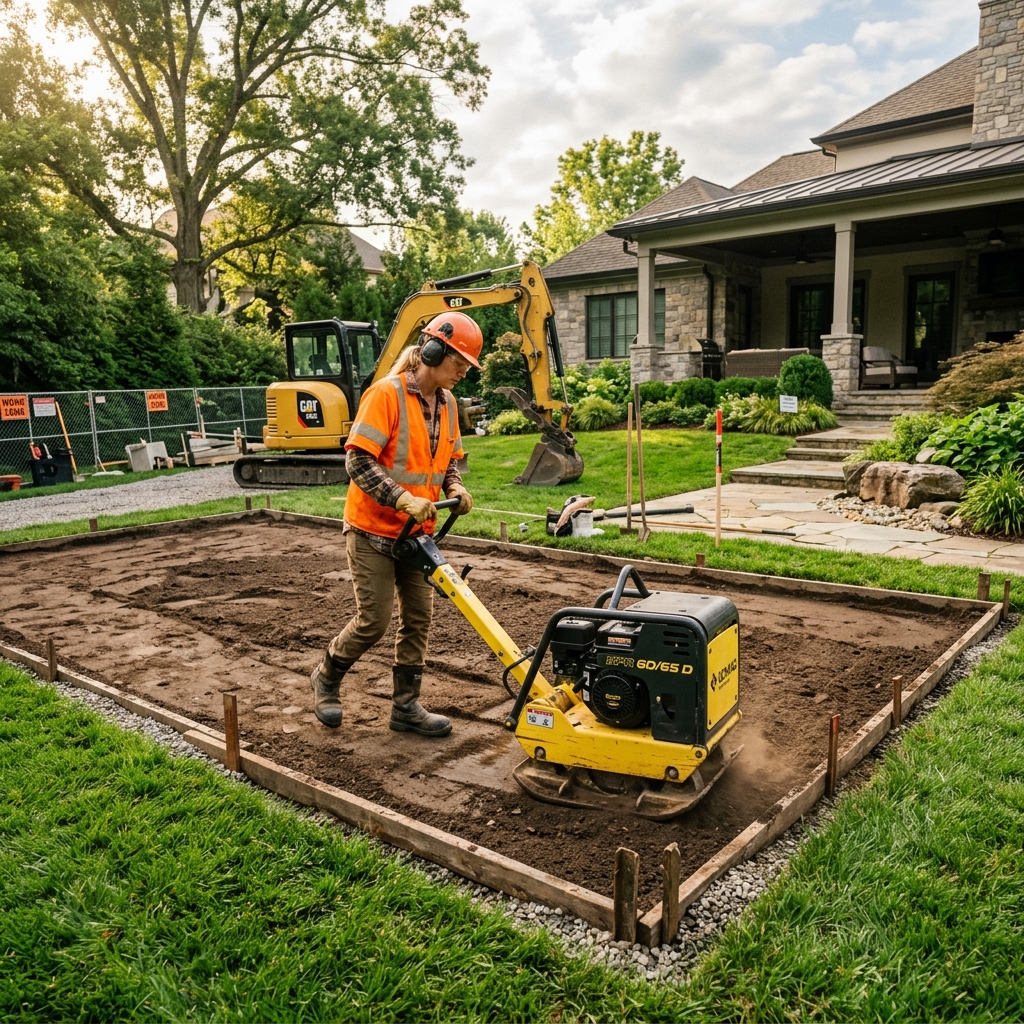
Our engineered drainage system utilizes #57 clean-wash stone—the same material used in civil highway construction—to create "Internal Relief Corridors." We don't just hope the water drains; we force it to follow a specific path away from the fill site and away from your home's foundation. This is a vital component of our engineered backfill protocol, which ensures total site stability.
Understanding MWS (Metro Water Services) Rules
In Metro Nashville, any grading project that alters the "discharge of stormwater" to a neighboring property is subject to strict regulation. Unpermitted work that causes flooding in a neighbor's yard is a fast-track to a lawsuit and a Metro Stop-Work Order. We coordinate directly with MWS to ensure your pool removal project follows the legal discharge protocols of Davidson County, protecting you from future liability.
Our Hydro-Hardware Stack
Commercial-grade hardware for residential reliability.
Non-Woven Geotextile
Prevents silt from clogging your drainage stone layers over time.
Schedule 40 HDPE
Heavy-duty piping that won't crush under the weight of 95% compacted soil.
#57 Surge Stone
The civil-engineering standard for subterranean water redirection.
Laser Grading
Final surface grading to 1/8" precision to ensure positive surface runoff.
Drainage & Aquifer FAQ
Will a pool removal increase runoff to my neighbors?
Not with our system. We engineer the final grade to mimic the natural flow of the local topography. In most cases, our engineered soil and drainage layers actually improve the drainage profile of the property compared to the old pool.
Do you use "Dry Wells"?
On properties with severe limestone shelves, yes. We may install a subterranean dissipation chamber (Dry Well) within the old pool footprint to manage burst rainfall events, ensuring your lawn stays dry and usable.
What is a "Sinking Yard" and how do you prevent it?
A yard "sinks" when water causes the underlying soil to settle. We prevent this via two methods: 95% Proctor compaction (mechanical density) and hydro-redirection (keeping the water away from the soil fibers in the first place).